
Tour participants: Guides Bert Rähni and Klaas Huwel with seven Naturetrek clients.
By Klaas Huwel
Day 1 Arrival to Tallinn
Weather at the time of the arrival: Clear sky, 17°C.
Late arrival and transfer to hotel
Day 2 Tallinn old town and Matsalu National Park
Weather: Partly cloudy, 18°C during the day. 10°C at night.
During the morning, the clients enjoyed a short walk through the historic centre of Tallinn before setting off towards Matsalu National Park. While Matsalu is best known as one of Northern Europe’s premier birdwatching destinations, it is also home to a healthy population of Eurasian lynx. The park’s mosaic of mixed forests, open meadows, and dense thickets provides ideal habitat for this elusive predator.
After checking into our guesthouse, we explored the surrounding area on foot. The meadows around the accommodation were in full bloom, supporting impressive numbers of Military Orchids and Common Twayblade. Whinchats and Northern Wheatears posed obligingly.
While scanning for shorebirds from a nearby observation tower, we encountered our first mammal of the tour: a beautiful Red Fox actively hunting across the coastal meadows. It would prove to be the first of many fox sightings during the week.
On our walk back to the guesthouse, the rich chorus of breeding birds continued with our first Thrush Nightingales and a singing Blyth’s Reed Warbler.
Following dinner, we embarked on our first nocturnal excursion. Equipped with thermal cameras, we carefully scanned both sides of the vehicle as darkness settled over the landscape. Throughout the evening we observed numerous Red Foxes, Roe Deer, and Brown Hares. Highlights included views of an Elk crossing an open meadow, as well as sightings of Raccoon Dog, European Badger, and European Polecat.
At around 1:30 a.m., we returned to the guesthouse after a successful first day in the field.
Day 3 The Eurasian Lynx
Weather: Partly cloudy, 17°C during the day. Foggy evening with 11°C at night.
After breakfast, we set out for a morning of birdwatching. We began in the immediate surroundings of the guesthouse, where we enjoyed views of White-tailed Eagles, Pied Avocets, Bar-tailed Godwits, Little Terns, and many other species.
Later in the morning, we drove to the historic town of Haapsalu. Here, the main target species was the stunning Slavonian Grebe. We were fortunate to find three different pairs and enjoyed prolonged, close views of these beautifully plumaged birds.
Following a short break and dinner, we prepared for our second night safari. Little did we know that one of the highlights of the entire tour awaited us.
Just ten minutes after leaving the guesthouse, we spotted a large animal standing in the middle of the road. Could it really be? To our amazement, it was indeed a magnificent male Eurasian Lynx, still active in the remaining daylight. The evening could not have begun in a better way.
The lynx appeared focused on the roadside ditch, clearly hunting rodents. After everyone had enjoyed good views, Bert carefully moved the vehicle forward to improve our vantage point. The cat remained completely absorbed in its hunt. Following an unsuccessful attempt to catch a rodent, it crossed the ditch and continued along the forest edge bordering the field.
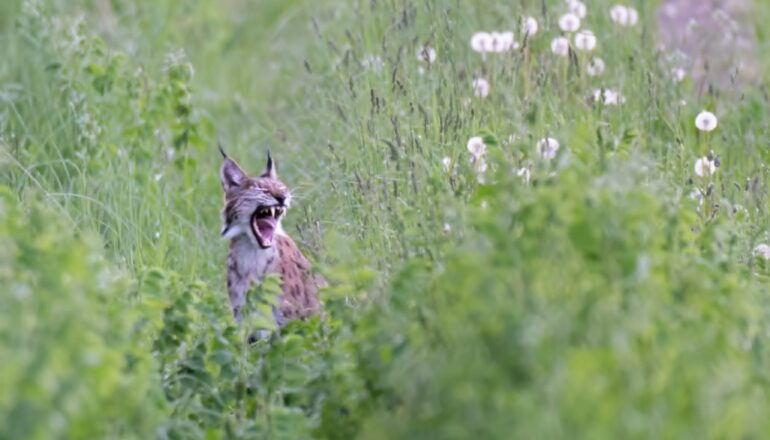
We parked the vehicle and watched in awe as the lynx yawned before resuming its search. At one point, it even launched itself into the tall grass in an attempt to catch prey. The animal gradually moved farther away, heading towards a parallel road on the opposite side of the field.
We decided to drive around and position ourselves along this road. What happened next exceeded all expectations.
Having relocated, we once again had excellent views of the lynx along the forest edge when we noticed a Brown Hare approaching from across the field. The lynx immediately lowered itself into the vegetation and waited patiently. It remained perfectly still as the unsuspecting hare moved closer and closer.
Then, in an instant, the lynx exploded into action.
With astonishing acceleration, it launched into pursuit, stretching its entire body as it attempted to close the distance. The scene was reminiscent of a cheetah chasing a gazelle on the African savannah, an extraordinary display of speed and power. For roughly fifty metres the chase continued, but eventually the lynx realised the hare had the advantage and abandoned the pursuit.
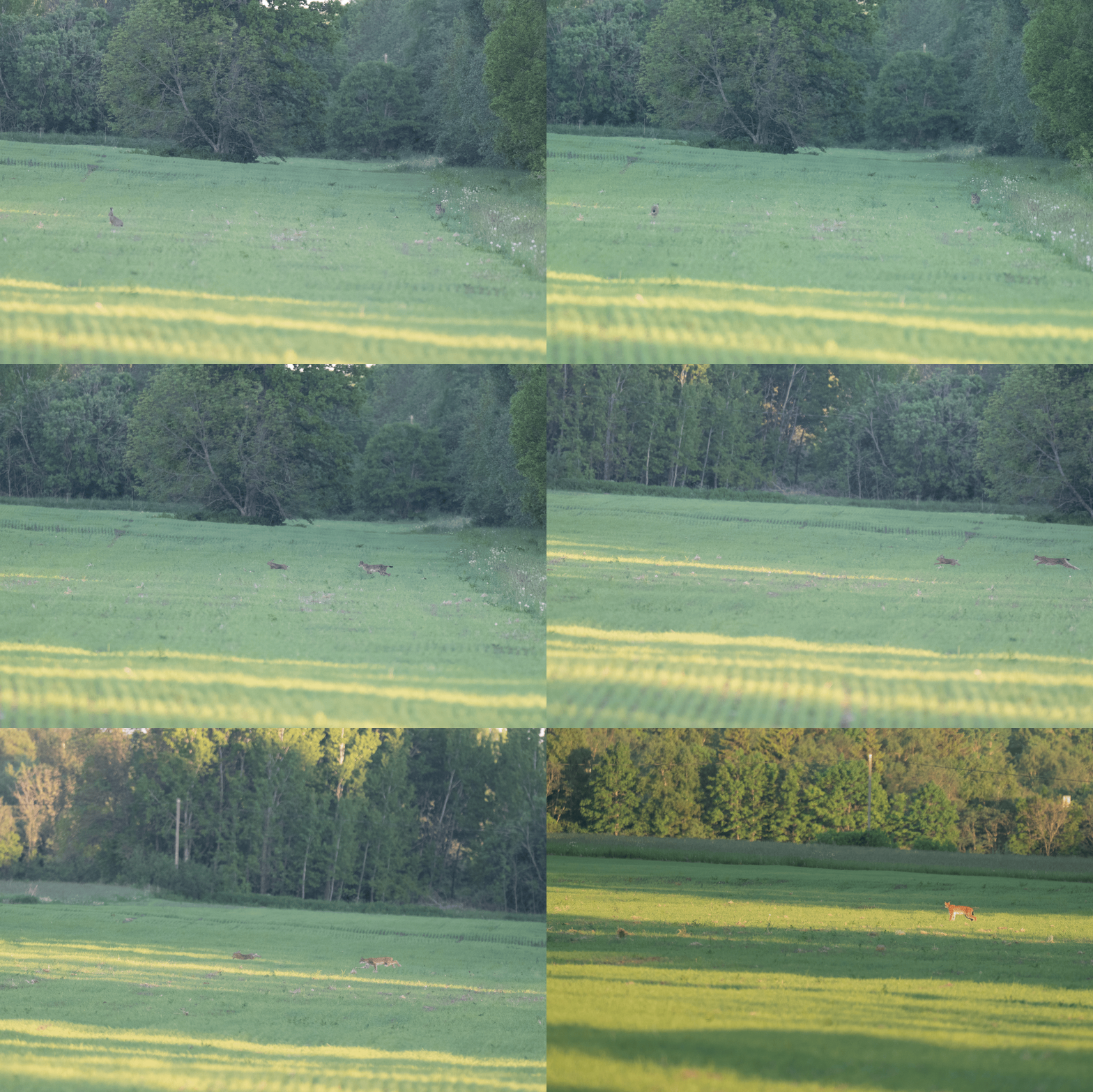
It was an unforgettable wildlife observation and undoubtedly one of the most remarkable lynx encounters any of us had ever witnessed.
Afterwards, we continued our night drive until around 1:30 a.m. As the evening progressed, a blanket of mist slowly settled across the meadows, while the distinctive calls of Corncrakes echoed through the darkness. It was a magical end to a truly exceptional day in Matsalu.
Day 4 Elks (Moose), European Beavers and Grey Wolf
Weather: Partly cloudy, 18°C during the day, 10°C at night.
After breakfast, we visited the famous Haeska observation tower in Matsalu National Park, one of the region’s premier birdwatching sites. The morning proved highly productive, with many new species added to our trip lists. A particular highlight was observing five different species of terns, offering excellent opportunities for comparison and observation.
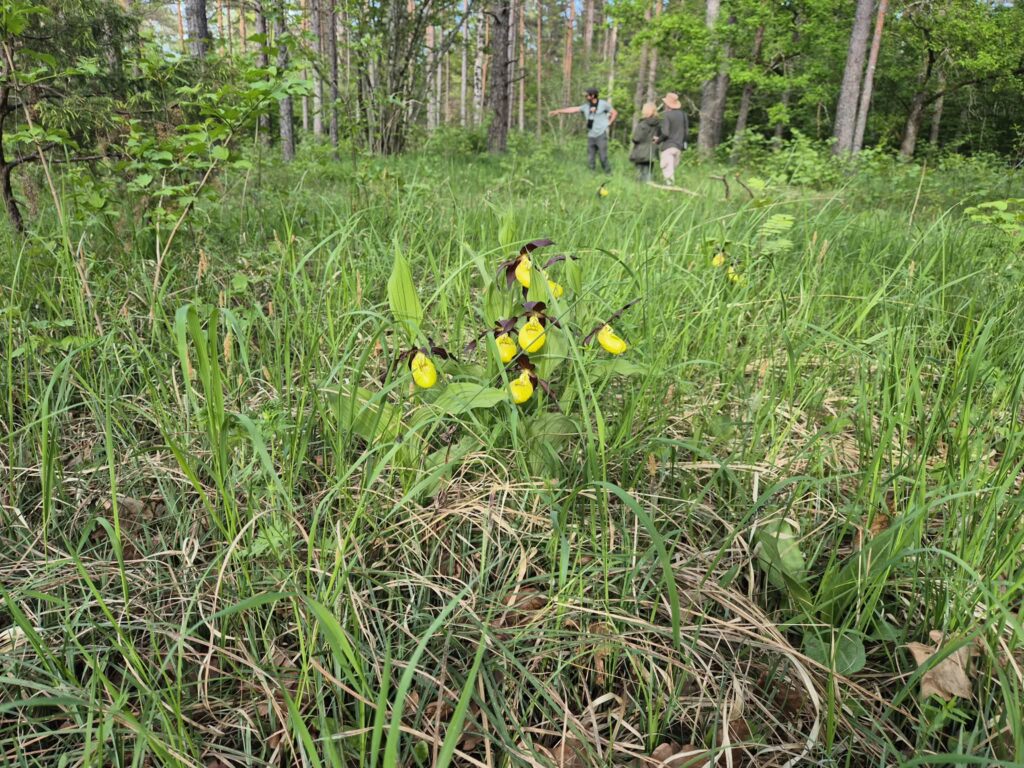
In the evening, a beaver boat excursion was on the agenda. On our way to the departure point, we encountered a family of Common Cranes with two chicks and made a stop at a forest meadow where thousands of Lady’s Slipper orchids were in spectacular bloom, a rare and wonderful sight.
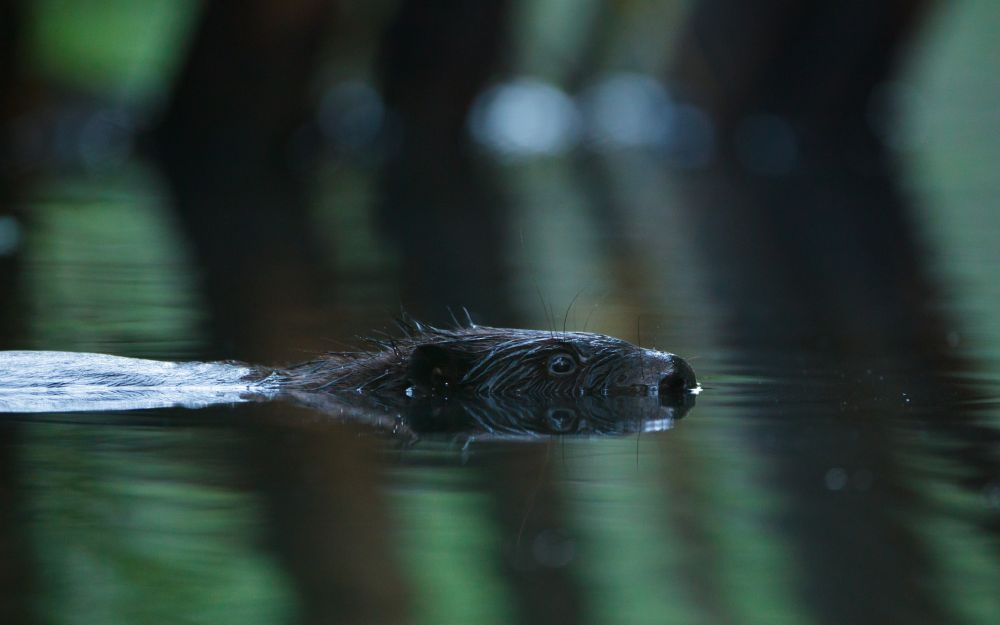
As we drifted along the river, the sounds of Savi’s Warblers, River Warblers, Reed Warblers, and Sedge Warblers accompanied us. It did not take long before we spotted our first Eurasian Beaver swimming across the water. Over the next hour, several more individuals would reveal themselves, providing excellent views.
After approximately ninety minutes, we reached a watchtower overlooking a vast meadow and reedbed complex. Earlier that day, we had received recent trail camera footage from the area showing a Eurasian Wolf, so anticipation was high as we carefully scanned the landscape and took our time. While watching from the tower, a Eurasian Curlew flew past, and several Elk could be seen feeding along the edge of the reeds and open meadows.
Then, suddenly, Terrence noticed movement in the distance. Bert immediatelyfocussed the telescope on the spot and quickly confirmed the identification: a Eurasian Wolf. Unfortunately, the animal only appeared briefly and was visible only from the watchtower, meaning not everyone managed to see it. Nevertheless, it was a thrilling observation that added another memorable mammal sighting to the tour.
On our return journey downriver, the evening continued to deliver, with numerous additional beaver sightings.
Day 5 Brown Bears and Raccoon dogs
Weather: Partly cloudy, 22°C during the day, 12°C at night.
Today marked our departure from Matsalu National Park after several wonderful days filled with memorable wildlife encounters. With a long journey ahead of us, we left in the morning and made a stop after a couple of hours to stretch our legs. A short walk through a mature forest provided short views of a flying and calling Black Woodpecker, and we enjoyed lunch before continuing our journey towards the bear hide.
By 5:00 p.m., we had settled into the hide and were ready for the evening ahead. Two highly sensitive microphones positioned outside transmitted the sounds of the surrounding forest directly into the hide, creating an immersive experience and allowing us to fully appreciate the atmosphere of the wilderness.
It did not take long before the first mammals appeared. The evening began with several Raccoon Dogs, a species that was completely new to some participants. Originally introduced from Asia during the mid-20th century to support the fur trade, the species has since become firmly established in Estonia. Throughout the evening, multiple individuals were observed around the hide, providing excellent viewing opportunities.
As daylight slowly faded, additional species made appearances. A Pine Marten briefly emerged from the forest edge, followed later by a European Badger.
As the hours passed and darkness gradually settled over the forest, hopes of seeing a Brown Bear began to diminish. Then, at around 11:00 p.m., the moment everyone had been waiting for finally arrived. A dark silhouette emerged silently from the forest. Moments later, the shape resolved itself into a female Eurasian Brown Bear.
The bear cautiously approached the clearing, moving from behind the hide towards the front and allowing everyone good views. Not long afterwards, a second bear appeared. Initially there was some visible tension between the two animals, but after a period of cautious interaction they seemed to tolerate one another and remained in the area together.
For some time, we enjoyed watching these magnificent animals in the fading light. Eventually, darkness became too intense for further observations, and the forest slowly disappeared into the night. With the highlight of the evening secured, everyone retired to bed.
Day 6 Lahemaa National Park
Weather: Sunny 24°C during the day, 16°C at night.
After just a few hours of sleep, it was time to wake up again and make the most of our final hours in the bear hide. The morning passed quietly at first, with little activity around the clearing. Then, suddenly, a huge male Brown Bear appeared.
Initially, the bear remained close to the forest edge, moving cautiously through the cover and showing only brief glimpses of itself. It seemed reluctant to venture into the open. Fortunately for us, the giant eventually gained confidence and stepped out of the forest, providing spectacular views. For nearly half an hour, we watched this magnificent animal as it calmly moved around the clearing, offering great photographic and observational opportunities.
It was the perfect conclusion to our stay at the bear hide. In just a few days, we had now managed to observe all three of Estonia’s large predators: Eurasian Lynx, Eurasian Wolf, and Brown Bear. A testament to the richness of Estonia’s wildlife.
After leaving the hide, we began our journey towards Lahemaa National Park. Upon arrival and check-in at the hotel, we set out on a short walk to explore our new surroundings.
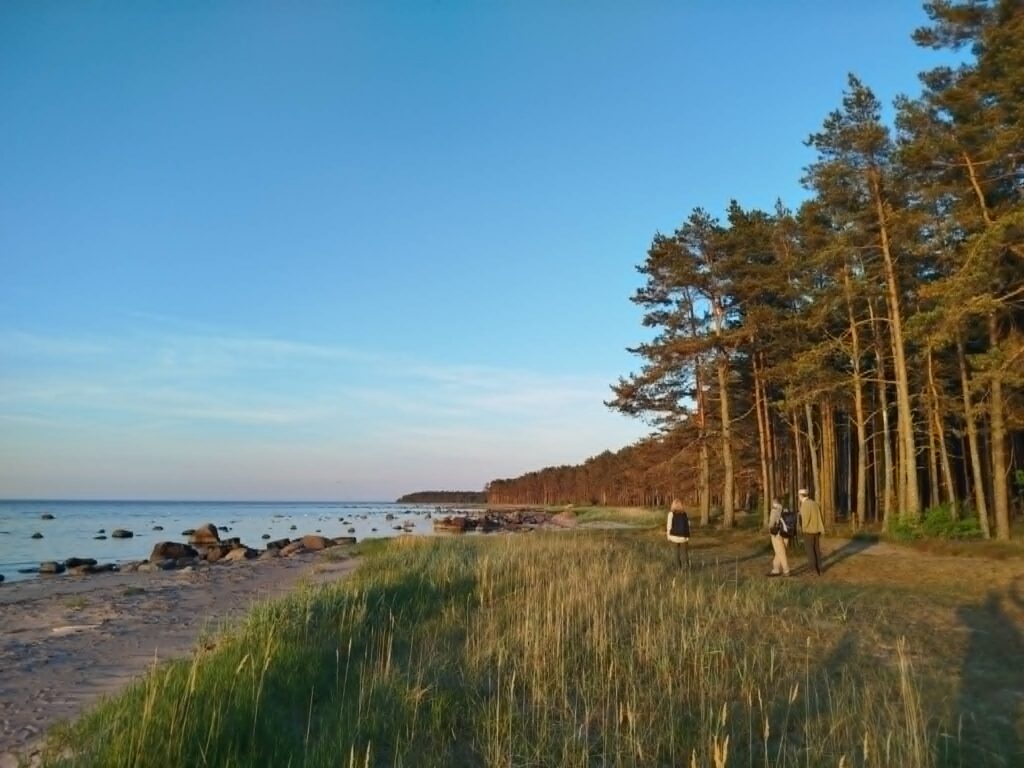
The trail began along the rugged coastline, where large glacial boulders lined the shore. Here we observed Goosanders, Red-breasted Mergansers, and several Black-throated Divers offshore. The route then led us through an old-growth pine forest, adding a different landscape to our journey.
Following a short break and dinner at the hotel, we returned to the coast in search of another elusive mammal: the Eurasian Otter. We found tracks and carefully scanned the shoreline and nearby waters until well after sunset. Despite our efforts, the otters remained hidden this evening.
Nevertheless, the outing was far from disappointing. A beautiful sunset illuminated the coastline, while seabirds continued to pass offshore in the fading light.
On the way back to the hotel we managed to get good views of mountain hares, our second hare species and a new mammal species for our trip.
Day 7 Alutaguse National Park and Flying Squirrels
Weather: Cloudy with some rain showers. 22°C during the day, 17°C at night.
Today was dedicated to one of Estonia’s most sought-after mammals: the Siberian Flying Squirrel.
The day began with a pleasant morning walk through the old-growth forests of Lahemaa National Park. We enjoyed views of a Wood Warbler and a Tree Pipit, while the distinctive song of a Red-breasted Flycatcher echoed through the forest.
Later, we returned to the coast for some seawatching. Unfortunately, our efforts were cut short when rain clouds moved in and the weather quickly deteriorated. With little sign of improvement, we decided to return to the hotel for a relaxing break before the evening’s main event.
After dinner, we departed for Alutaguse National Park, Estonia’s stronghold for the endangered Siberian Flying Squirrel. As we travelled deeper into the vast forest landscape, it became immediately apparent that we were back in bear country. Numerous Brown Bear droppings along the forest roads provided a clear reminder of the area’s wild character.
Upon arrival at our meeting point, we were greeted by Kadri, a Siberian Flying Squirrel researcher and expert. Before searching for our target species, she showed us an active nesting cavity excavated by a Great Spotted Woodpecker and explained the importance of such cavities for many forest-dwelling species. She then provided insights into the ecology, behaviour, and conservation challenges faced by the Siberian Flying Squirrel in Estonia.
After answering our questions, Kadri guided us to the tree cavity currently occupied by a male flying squirrel. At the base of the tree, she pointed out fresh droppings, a promising sign that the animal was still using the cavity. We quietly took our positions and prepared to wait.
Unfortunately, this has been an exceptionally difficult year for the species in Estonia. Researchers have struggled to locate breeding females, and many trail cameras that would normally record squirrel activity have remained empty. As a result, our hopes rested entirely on the male squirrel occupying this cavity.
The fresh signs gave us confidence, but as the evening progressed and darkness slowly enveloped the forest, the squirrel remained hidden. We waited patiently well beyond sunset, but eventually the light became too poor for effective observation and we decided to return to the hotel.
Although the main target species eluded us, the journey back still produced some nice sightings. Multiple European Nightjars were seen sitting on the forest roads, an Elk was briefly seen through the thermal binoculars, and, perhaps best of all, a beautiful Ural Owl was observed from the vehicle.
Day 8 Kõrvemaa Nature Reserve and Kõnnu Raised Bog
Weather: Cloudy with some rain showers. 17°C during the day.
With our flight departing later in the afternoon and a return to the airport scheduled for around 3:00 p.m., there was still time for one final excursion.
After breakfast, we left Lahemaa National Park and headed towards Kõrvemaa Nature Reserve for a walk through one of Estonia’s characteristic raised bogs. The journey itself produced some rewarding sightings. An Elk was observed in a forest clearing, while a Great Grey Shrike, still missing from our trip list, provided a welcome addition to our growing tally of species.
Upon entering the bog, we were greeted by the distinctive aromas of Labrador Tea and Bog Myrtle, two characteristic plants of these unique peatland ecosystems. The combination of open landscapes, colourful vegetation, and vast expanses of moss created a striking contrast to the forests and coastal habitats we had explored earlier in the week.
The raised bog also proved to be a good final birding location. Some additional species were added to our lists, with Wood Sandpiper and Golden Plover in beautiful breeding plumage among the highlights.
It was a fitting conclusion to a highly successful tour. The exceptionally long northern daylight hours had made for some demanding days and short nights, but the rewards were well worth the effort. Over the course of the trip, we recorded an impressive 16 species of mammals and saw or heard 134 species of birds.
Mammals
Common name Scientific name
- European Hare Lepus europaeus
- Mountain Hare Lepus timidus
- Eurasian Beaver Castor fiber
- Eurasian Red Squirrel Sciurus vulgaris
- Western Roe Deer Capreolus capreolus
- Elk (Moose) Alces alces
- Eurasian Lynx Lynx lynx
- Chinese Raccoon Dog Nyctereutes procyonoides
- Red Fox Vulpes vulpes
- Grey Wolf Canis lupus
- Brown Bear Ursus arctos European
- Pine Marten Martes martes
- European Polecat Mustela putorius
- Badger Meles Meles Vole spec
- Northern Bat Eptesicus Nilssonii
Birds
- Brent Goose Branta bernicla
- Barnacle Goose Branta leucopsis
- Greylag Goose Anser anser
- Taiga Bean Goose Anser fabalis
- Greater White-fronted Goose Anser albifrons
- Mute Swan Cygnus olor
- Whooper Swan Tadorna tadorna
- Common Shelduck Tadorna tadorna
- Eurasian Wigeon Mareca penelope
- Mallard Anas platyrhynchos
- Northern Pintail Anas acuta
- Eurasian Teal Anas crecca
- Tufted Duck Aythya fuligula
- Common Eider Somateria mollissima
- Long-tailed Duck Clangula hyemalis
- Common Goldeneye Bucephala clangul
- Goosander Mergus merganser
- Red-breasted Merganser Mergus serrator
- Common Swift Apus apus
- Common Cuckoo Cuculus canorus
- Feral Rock Dove – I Columba livia ‘domestica’
- Common Wood Pigeon Columba palumbus
- Eurasian Coot Fulica atra
- Common Crane Grus grus
- Great Crested Grebe Podiceps cristatus
- Eurasian Oystercatcher Haematopus ostralegus
- Grey Plover Pluvialis squatarola
- European Golden Plover Pluvialis apricaria
- Common Ringed Plover Charadrius hiaticula
- Northern Lapwing Vanellus vanellus
- Eurasian Curlew Numenius arquata
- Eurasian Woodcock Scolopax rusticola
- Common Snipe Gallinago gallinago
- Green Sandpiper Tringa ochropus
- Wood Sandpiper Tringa glareola
- Common Redshank Tringa totanus
- Common Greenshank Tringa nebularia
- Dunlin Calidris alpina
- Little Tern Sternula albifrons
- Caspian Tern Hydroprogne caspia
- Arctic Tern Sterna paradisaea
- Common Tern Sterna hirundo
- Sandwich Tern Thalasseus sandvicensis
- Black-headed Gull Chroicocephalus ridibundus
- Common Gull Larus canus
- European Herring Gull Larus argentatus
- Greater Black-backed Gull Larus fuscus
- Black-throated Diver Gavia arctica
- White Stork Ciconia ciconia
- Great Cormorant Phalacrocorax carbo
- Eurasian Bittern Botaurus stellaris
- Grey Heron Ardea cinerea
- Eurasian Sparrowhawk Accipiter nisus
- Montagu’s Harrier Circus pygargus
- Western Marsh Harrier Circus aeruginosus
- White-tailed Eagle Haliaeetus albicilla
- Common Buzzard Buteo buteo
- Tawny Owl Strix aluco
- Ural Owl Strix uralensis
- Eurasian Wryneck Jynx torquilla
- Great Spotted Woodpecker Dendrocopos major
- Black Woodpecker Dryocopus martius
- Eurasian Hobby Falco subbuteo
- Great Grey Shrike Lanius excubitor
- Red-backed Shrike Lanius collurio
- Eurasian Jay Garrulus glandarius
- Eurasian Magpie Pica pica
- Western Jackdaw Coloeus monedula
- Rook Corvus frugilegus
- Hooded Crow Corvus cornix
- Northern Raven Corvus corax
- Crested Tit Lophophanes cristatus
- Eurasian Blue Tit Cyanistes caeruleus
- Great Tit Parus major
- Eurasian Skylark Alauda arvensis
- Barn Swallow Hirundo rustica
- Western House Martin Delichon urbicum
- Wood Warbler Phylloscopus sibilatrix
- Willow Warbler Phylloscopus trochilus
- Common Chiffchaff Phylloscopus collybita
- Great Reed Warbler Acrocephalus arundinaceus
- Sedge Warbler Acrocephalus schoenobaenus
- Blyth’s Reed Warbler Acrocephalus dumetorum
- Common Reed Warbler Acrocephalus scirpaceus
- Marsh Warbler Acrocephalus palustris
- Icterine Warbler Hippolais icterina
- River Warbler Locustella fluviatilis
- Savi’s Warbler Locustella luscinioides
- Common Grasshopper Warbler Locustella naevia
- Eurasian Blackcap Sylvia atricapilla
- Garden Warbler Sylvia borin
- Lesser Whitethroat Curruca curruca
- Common Whitethroat Curruca communis
- Eurasian Wren Troglodytes troglodytes
- Eurasian Nuthatch Sitta europaea
- Common Starling Sturnus vulgaris
- Song Thrush Turdus philomelos
- Redwing Turdus iliacus
- Common Blackbird Turdus merula
- Fieldfare Turdus pilaris
- Ring Ouzel Turdus torquatus
- Spotted Flycatcher Muscicapa striata
- European Robin Erithacus rubecula
- Thrush Nightingale Luscinia luscinia
- Red-breasted Flycatcher Ficedula parva
- European Pied Flycatcher Ficedula hypoleuca
- Black Redstart Phoenicurus ochruros
- Common Redstart Phoenicurus phoenicurus
- Whinchat Saxicola rubetra
- European Stonechat Saxicola rubicola
- Northern Wheatear Oenanthe oenanthe
- Eurasian Tree Sparrow Passer montanus
- House Sparrow Passer domesticus
- Western Yellow Wagtail Motacilla flava
- White Wagtail Motacilla alba
- Meadow Pipit Anthus pratensis
- Tree Pipit Anthus trivialis
- Eurasian Chaffinch Fringilla coelebs
- Eurasian Bullfinch Pyrrhula pyrrhula
- Common Rosefinch Carpodacus erythrinus
- European Greenfinch Chloris chloris
- Common Linnet Linaria cannabina
- European Goldfinch Carduelis carduelis
- Eurasian Siskin Spinus spinus
- Yellowhammer Emberiza citrinella
- Common Reed Bunting Emberiza schoeniclus
- Horned Grebe Podiceps auritus
- Gadwall Mareca strepera
- Corncrake Crex crex
- Garganey Spatula querquedula
- Great White Egret Ardea alba
- Black-tailed Godwit Limosa limosa
- Bar-tailed Godwit Limosa lapponica
- Avocet Recurvirostra avosetta
- Common Sandpiper Actitis hypoleucos
- Baltic Herring Gull Larus argentatus omissus
- Lesser Black-backed Gull Larus fuscus
- Nightjar Caprimulgus europaeus